• FailUp Capital Research Team
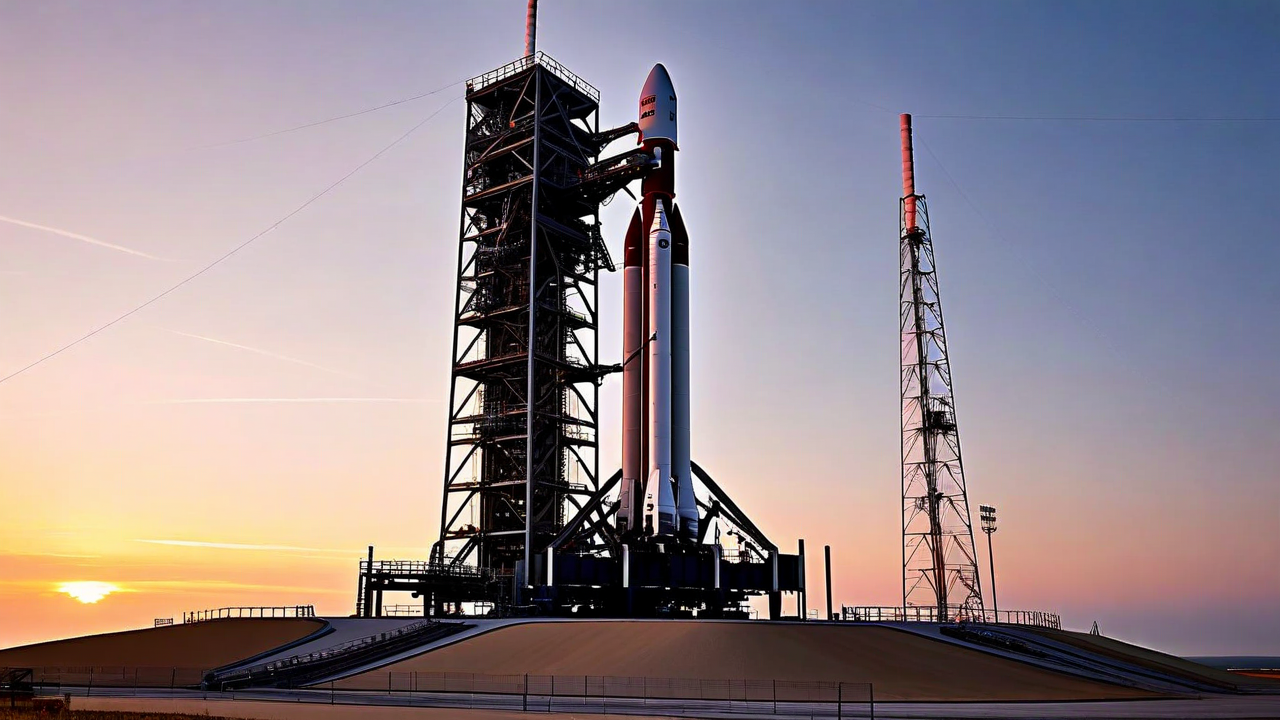
In 1962, the cost of delivering one kilogram of payload to low Earth orbit was approximately $54,000 in inflation-adjusted dollars. By 2010, that figure had barely moved — decades of government-dominated launch markets had produced little cost reduction. Then, in the decade that followed, commercial aerospace pioneers demonstrated that the economics of space access could be fundamentally transformed. By 2021, the cost per kilogram to LEO had fallen below $3,000 — and was still falling.
This cost reduction has not simply made existing space applications cheaper. It has made entirely new categories of space applications economically viable for the first time. Satellite constellations numbering in the thousands. In-orbit manufacturing of materials that cannot be produced on Earth. Space-based solar power. Lunar resource extraction. The architecture of the space economy is being rewritten, and the companies doing the rewriting are deep tech startups operating at the absolute frontier of aerospace engineering.
The Propulsion Revolution
Rocket propulsion is the constraint that governs all of space access. The rocket equation — the mathematical relationship between propellant mass, structural mass, and achievable velocity — sets hard limits on what any rocket can do. Improving these limits requires either improving specific impulse (the efficiency of propellant use), reducing structural mass, or finding clever architectural solutions like staged vehicles, air-launched rockets, or propellant production in space itself.
Electric propulsion systems — ion drives, Hall-effect thrusters, and related technologies — achieve specific impulses many times higher than chemical rockets. They are already powering many satellites for station-keeping and orbital maneuvers. The challenge is thrust: electric propulsion produces very low thrust, meaning it is only suitable for missions where long burn times are acceptable. Improving the thrust-to-power ratio of electric propulsion systems is an active area of research with significant implications for deep space missions and eventual interplanetary travel.
Methane-fueled rocket engines represent another frontier. Methane has advantages over kerosene — the fuel used in many heritage rockets — including cleaner combustion, higher performance, and the theoretical ability to be produced from water and carbon dioxide on Mars (enabling in-situ propellant production for return missions). The development of methane engines by commercial companies has introduced new manufacturing techniques and performance targets that are rippling across the industry.
Nuclear thermal propulsion is a more distant but potentially transformative technology. A nuclear thermal rocket uses a nuclear reactor to heat propellant rather than burning chemical fuel, achieving specific impulses roughly twice those of the best chemical rockets. This would halve the propellant mass required for a given mission, enabling either much larger payloads or much shorter transit times. Several government and commercial programs are actively developing nuclear thermal propulsion systems for potential use in lunar and Mars missions.
Reusability: The Architecture That Changed Everything
The most significant aerospace innovation of the 2010s was not a new engine or a new material — it was a systems architecture decision: the choice to make rockets reusable. When the first stage of a launch vehicle can be recovered, refurbished, and relaunched, the economics of space access change fundamentally. Rather than discarding hardware worth tens of millions of dollars after each flight, an operator can amortize that capital investment over dozens of flights.
Reusability requires solving difficult engineering problems. The thermal loads during reentry are extreme. The precision required for propulsive landing demands advanced guidance, navigation, and control systems. The structural design must accommodate reuse without prohibitive maintenance requirements between flights. And the entire operational model of the launch business must be redesigned around refurbishment and rapid turnaround.
Startups in the launch industry are approaching reusability in different ways. Some focus on small launch vehicles that can serve the growing market for dedicated small satellite launches. Others are developing air-launched systems that eliminate the first-stage recovery problem by launching from aircraft at altitude. Still others are working on fully reusable two-stage vehicles at scales competitive with existing expendable rockets.
In-Space Manufacturing and Orbital Platforms
As launch costs fall, the economics of doing things in space rather than on Earth begin to change for a growing number of applications. The microgravity environment of orbit enables manufacturing processes that are physically impossible on Earth. Certain optical fibers can be grown with less structural imperfection in microgravity. Certain pharmaceutical compounds crystallize more uniformly. Certain alloys can be mixed in ways that gravity prevents on the surface.
The development of commercial space stations — the successors to the International Space Station — will provide infrastructure for in-space manufacturing startups that cannot afford to develop their own orbital platforms. Several companies are developing small free-flyer platforms that can be deployed from the ISS, conduct manufacturing runs, and return product to Earth via reentry capsules. The first commercial in-space manufacturing facilities are likely to come online in the mid-2020s.
Earth Observation and the Data Layer
One of the most commercially mature segments of the new space industry is Earth observation. Constellations of small, relatively inexpensive satellites equipped with optical, radar, and hyperspectral imaging systems are generating data products with applications in agriculture, insurance, financial services, defense, and environmental monitoring. The value of this data lies not in the satellites themselves but in the analytics that extract actionable insights from petabytes of orbital imagery.
The deep tech investment opportunity in this segment has increasingly shifted from launch and satellite manufacturing — which are becoming more commoditized — to the data science and analytics layer. Machine learning tools for change detection, anomaly identification, and predictive modeling are generating the commercial value. Founders who combine domain expertise in Earth observation with strong data science capabilities are building businesses with genuine software-like margins on top of hardware-enabled data collection.
FailUp Capital's Perspective on Aerospace Investment
Aerospace is one of the most capital-intensive and technically demanding sectors in all of deep tech. The failure modes are expensive, the regulatory environment is complex, and the timelines to commercial revenue are long. For these reasons, we at FailUp Capital are highly selective in the aerospace bets we take.
We look for teams with genuine technical pedigree — founders who have built hardware that flies, engineers who have solved real aerospace system integration challenges. We look for applications where the customer is willing and able to pay a premium for performance rather than cost — defense, national security, and high-value commercial applications where a startup can generate revenue long before achieving the scale of a mass market launch provider. And we look for technologies with genuine barriers to replication: novel propulsion concepts, breakthrough materials applications, or data analytics tools that are deeply integrated with proprietary satellite constellations.
Key Takeaways
- Launch costs to LEO have fallen by more than 95% over the past two decades, enabling entirely new categories of space applications.
- Propulsion innovation — from methane engines to nuclear thermal systems — continues to push the performance frontier of space access.
- Reusability is the architectural revolution that changed the economics of launch; startups are applying the principle across different vehicle classes and scales.
- In-space manufacturing is an emerging commercial category enabled by falling launch costs and the unique properties of the microgravity environment.
- The most defensible aerospace investment opportunities combine genuine technical pedigree with customers willing to pay for performance rather than just cost.
Aerospace Founders: Talk to Us
FailUp Capital invests in the hardest technical problems in aerospace. If you are building at the frontier, we want to hear your story.
Get in Touch